- Dr. Chara
- Team
- Success stories
- ServicesSee all treatments →
Other
- Hair transplant
- Repair of previous surgeries
- Hair transplant with long hair (long hair fue)
- Male hair mesotherapy
- Long Hair eyebrow transplant
- Scar repair
- Pharmacological treatments
- Hair transplant in a transgender patient
- Beard and mustache transplant
- Regenerative therapy
- Genetic study (trichotest)
- Trichological diagnosis
- Contact
Can hair be transplanted into a scar?
Yes, in many cases. A scar hair transplant involves implanting follicular units from your own donor area into the scar tissue to conceal it. It is possible as long as the scar is stable and has a good enough blood supply.
Scar tissue nourishes the follicle less well than healthy scalp, so transplanted hair grows more slowly and less predictably: it can take up to 12 months to cover the area, and the scar cannot always be hidden completely. That is why the prior assessment is especially important here.
At our clinic in Barcelona we treat scars from surgery, accidents or burns, and those left by older transplant techniques such as FUT, on the scalp as well as in the beard or eyebrows.
FUE
follicle by follicle, with your own hair
1–6 h
of surgery, depending on the size of the scar
12 months
for the transplanted hair to cover the area
2 years
without activity if the cause is an inflammatory disease
Which scars can be treated
- Surgical scars on the scalp, for example after neurosurgery or a facelift.
- Scars from accidents, injuries or burns.
- The linear scar from the FUT technique, the strip technique that leaves a line at the back of the head.
- Gaps in the donor area from over-harvesting in a previous FUE.
- Scars in the beard and eyebrows, which are filled in with the same technique.
Each one has a different outlook depending on its size, thickness and blood supply.
Who is a good candidate?
The procedure, step by step
Depending on the size of the scar, the procedure takes between 1 and 6 hours. The risks are similar to those of a conventional FUE hair transplant.
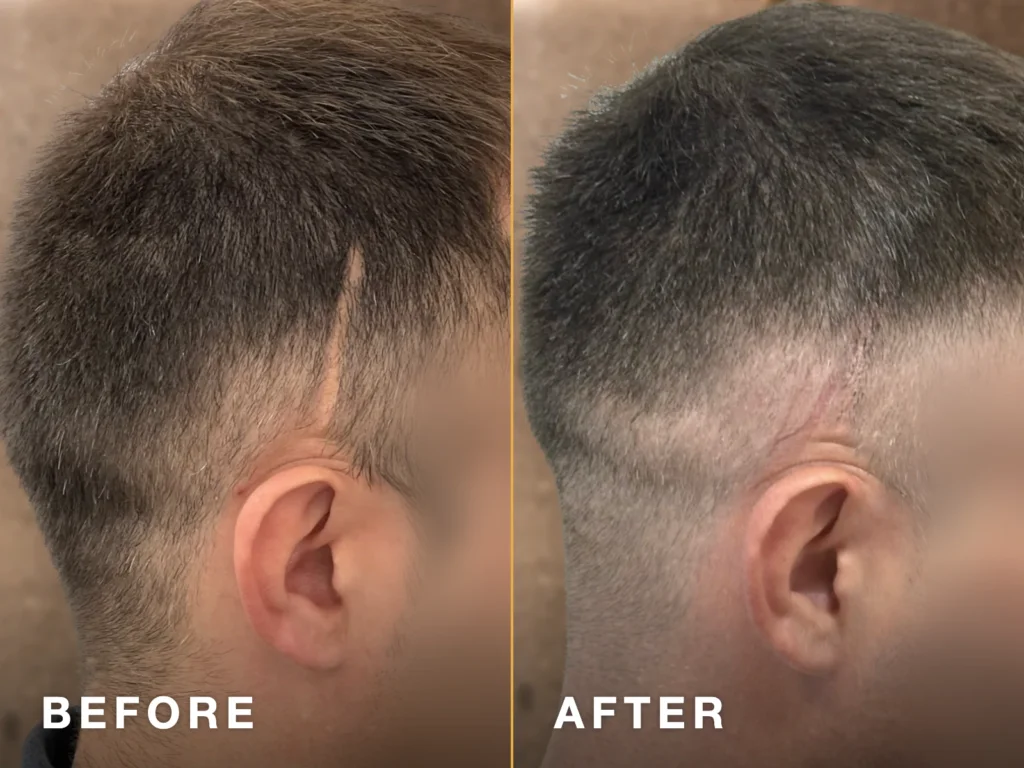
Assessment
We study the type of scar, its thickness, its blood supply and your donor area in a trichological diagnosis, to find out whether a transplant is viable.
Planning
We decide how many grafts to place and at what density. Scar tissue calls for caution, and the work is sometimes planned in several stages to check how it responds.
Extraction
Under local anaesthesia, the follicular units are extracted one by one with the FUE technique from the back and sides of the head.
Implantation
They are placed on the scar following the direction and angle of the surrounding hair, so they blend in naturally.
Check-ups
We follow your progress until the transplanted hair has finished growing.
How to conceal an FUT scar
The FUT, or strip, technique removed a band of skin from the back of the head and left a linear scar in the donor area. It is one of the most common reasons patients come to see us.
Using the FUE technique, we extract follicular units from the back and sides of the scalp and implant them along the line to break up its outline. This way the scar blends in with the rest of the hair and is concealed.
If the scar is wide, irregular or has healed poorly, the result may be more limited, and it is sometimes worth combining it with other treatments such as micropigmentation. If the previous transplant also looks unnatural, we assess it as part of the repair of previous hair transplants.
Recovery and results
First few days
Small scabs form on the treated area and come off with washing, following the instructions we give you.
Weeks 2 to 6
The implanted hair shaft falls out while the follicle stays alive: this is shock loss.
Months 3 to 4
New hair starts to grow; on scar tissue it may take a little longer.
Up to 12 months
The transplanted hair keeps growing and we assess how well it conceals the scar.
If needed
A second stage is planned to increase density over the scar.
Growth on a scar is less predictable than on healthy scalp. That is why we do not promise to hide it completely, but to conceal it as much as your skin allows.
QuoteTailored to youWe give it to you at your free assessment, with no obligation.
How much does a scar hair transplant cost?
The price depends on the size of the scar, the number of grafts needed and whether it is best done in one stage or several. That is why there is no fixed price: we give you a detailed quote after assessing your case.
The assessment is free and with no obligation.
Frequently asked questions about scar hair transplants
In many cases, yes, as long as the scar is mature and the skin has a good enough blood supply. The prior assessment is especially important, because scar tissue does not behave like healthy scalp.
Scars from previous surgery, injuries or burns, and those left by older transplant techniques such as FUT. Each one has a different outlook depending on its thickness, size and blood supply.
Very large scars, hypertrophic scars or keloids, deep burn scars and old scars with a poor blood supply. In these cases the skin sometimes needs preparing, or the transplant has to be combined with other treatments.
It usually requires more caution: graft survival in scar tissue is less predictable, so lower densities are sometimes used, or the work is planned in several stages to check the response.
The scar has to be stable. The timing depends on its cause and how it evolves, and it is decided at the consultation. If it is due to an inflammatory scalp disease, you need to wait at least two years without activity.
Yes, it is one of the most common requests. The linear scar at the back of the head can be repopulated with follicular units extracted by FUE to break up its outline, with the same precautions as any scar tissue.
Between 1 and 6 hours, depending on the size of the area to be treated. It is done under local anaesthesia as an outpatient procedure: you go home the same day.
FUE extraction leaves tiny dot-like marks in the donor area which, once healed, are not usually noticeable when the hair is kept at a normal length. How visible they are depends on the number of extractions and how each person's skin heals.
When the skin cannot take a transplant, other camouflage options can be considered, such as micropigmentation. We explain them at the assessment depending on what is feasible in your case.
Other treatments you may be interested in
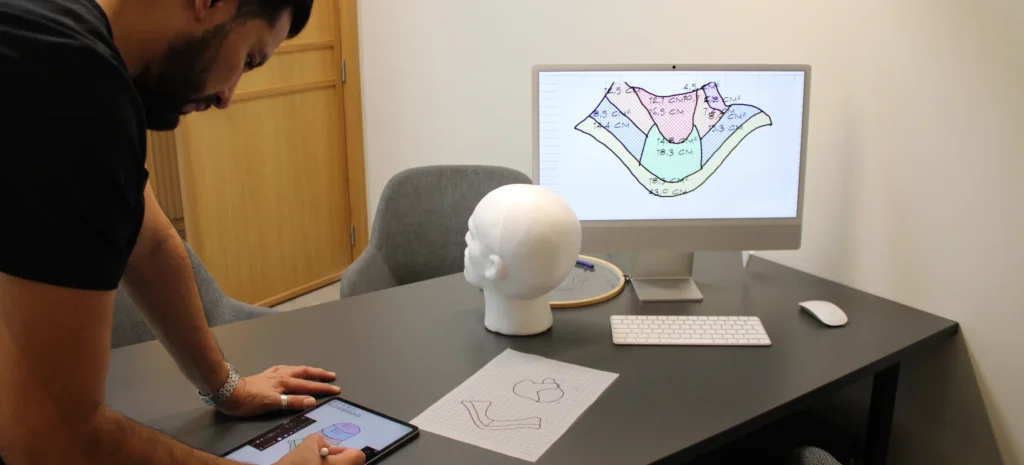
Hair Transplant Repair
Correction of hair transplants with unnatural results: artificial hairlines, low density or an over-harvested donor area. We assess your case with no obligation.
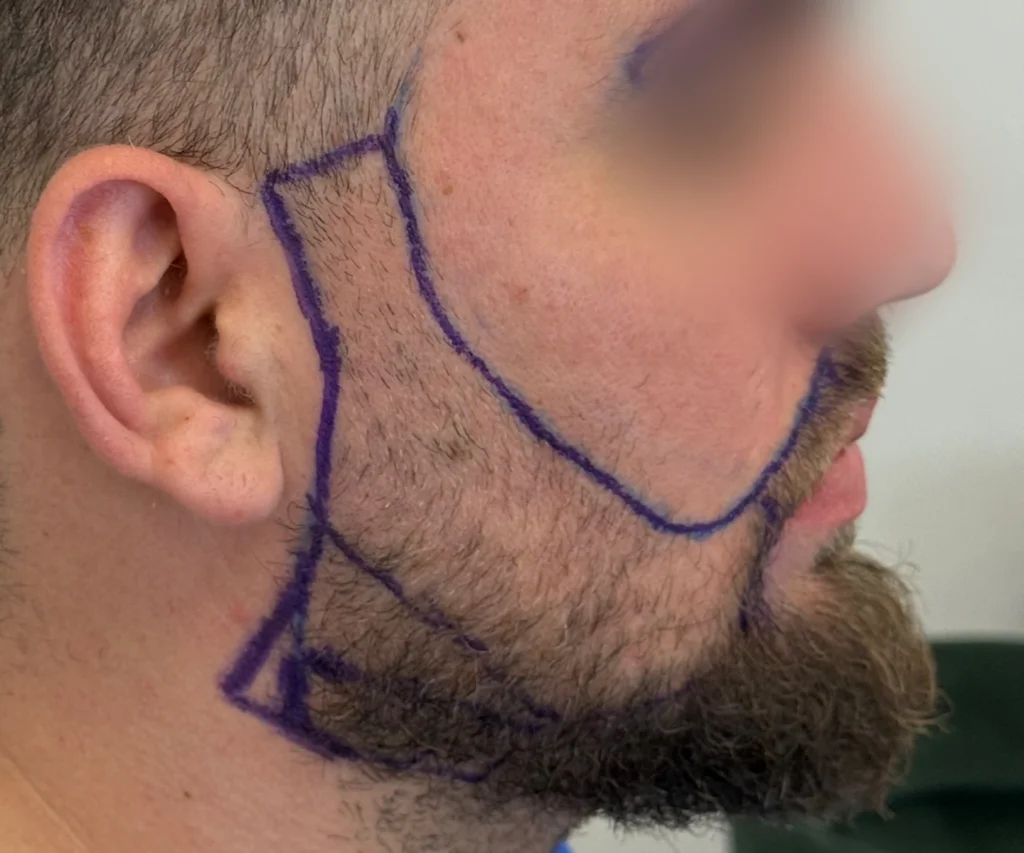
Beard & Moustache Transplant in Barcelona
FUE beard and moustache transplant in Barcelona: fill in patchy areas or scars with your own hair for a natural result. Free assessment.
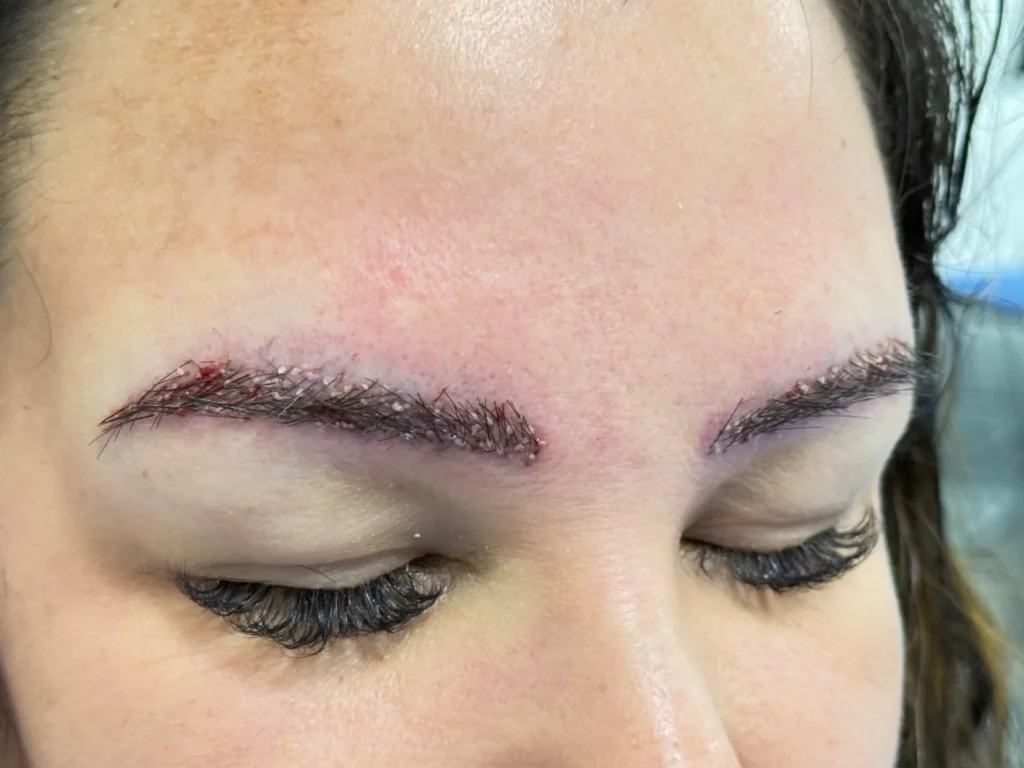
Long Hair Eyebrow Transplant in Barcelona
Long Hair eyebrow transplant in Barcelona: add density or redesign your eyebrows hair by hair, following the natural direction of growth. Permanent result.